An urgent care vet visit and a trip to the emergency hospital solve two different problems, and picking the wrong one can cost your pet time it does not have, or cost you a long night in a waiting room for something your regular vet could have handled that afternoon. This guide explains the three levels of veterinary care, the signs that mean “go now,” the symptoms that can safely wait for a same-day appointment, and the gray areas in between. If you are looking for an animal hospital near me in southwest Orlando, Vineland Animal Hospital sees sick dogs and cats the same day whenever possible and will tell you honestly when a problem belongs at an emergency hospital instead.
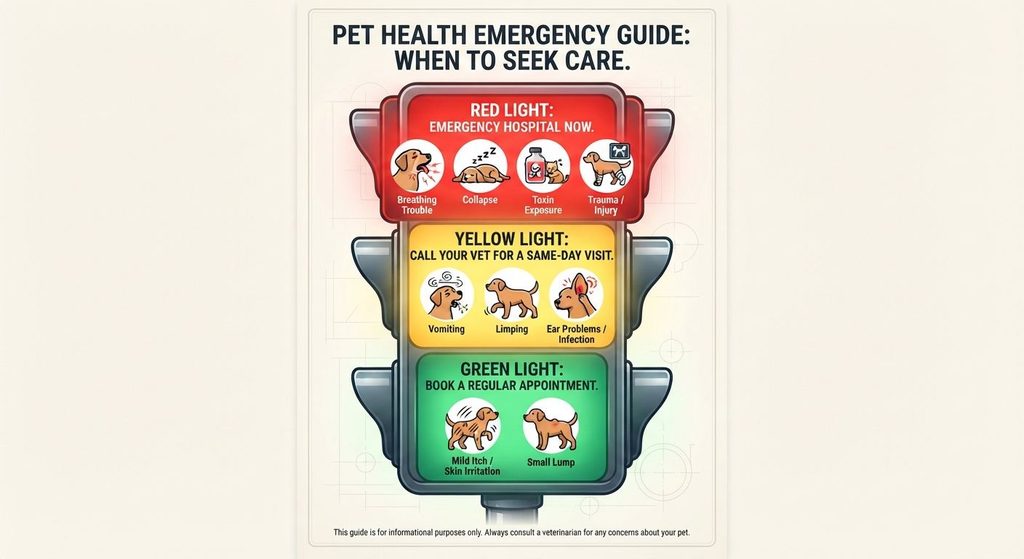
Three Levels of Veterinary Care, Explained
Pet owners often use “urgent care,” “same-day vet” and “emergency vet” as if they mean the same thing. They do not. Each one is built for a different level of illness.
Same-Day Sick Visits at Your Regular Vet
Many general practices keep space in the schedule for pets that get sick without warning. Your pet is seen by a doctor who already has its medical history, vaccine records and past lab results. That history matters. A vet who knows your dog’s baseline bloodwork or your cat’s usual weight can spot a change faster than someone meeting your pet for the first time.
Standalone Urgent Care Clinics
Urgent care for pets sits between a regular appointment and the emergency room. These clinics usually offer walk-in or same-day visits with longer opening windows than a typical practice, but they are not set up for critical cases that need overnight intensive care or emergency surgery. When people search for vet urgent care near me, they are usually describing a non-life-threatening problem that cannot wait a week.
24-Hour Emergency Hospitals
Emergency hospitals are staffed around the clock for life-threatening situations: trauma, breathing problems, poisonings, bloat and other crises that need oxygen, intensive monitoring or surgery right away. Patients are triaged by severity, not arrival order, so a pet with a mild problem can wait a long time while critical cases go first.
| Feature | Same-Day Visit at Your Vet | Urgent Care Vet Clinic | Emergency Hospital |
|---|---|---|---|
| Best for | Sudden but stable illness or injury | Stable problems when your vet is booked | Life-threatening problems |
| Knows your pet’s history | Yes | Rarely | Rarely |
| Availability | During clinic hours | Extended daily hours | 24 hours, every day |
| Order patients are seen | Scheduled or fit in | Arrival or appointment | By severity (triage) |
| Overnight ICU care | No | No | Yes |
| Follow-up care | Same doctor | Usually sent back to your vet | Usually sent back to your vet |
Go to an Emergency Hospital Now: Red-Flag Signs
Some symptoms should never wait for a callback or an open appointment slot. Head straight to the nearest 24-hour emergency hospital if your pet has any of these:
- Breathing trouble: open-mouth breathing in a cat, constant heavy panting at rest, or gums that look pale, blue or gray
- Collapse or sudden weakness: your pet cannot stand or is unresponsive
- Seizures: one lasting more than a few minutes, or several in a row
- Major trauma: hit by a car, a fall from a height, or a dog attack, even if your pet seems fine afterward
- Possible bloat: a swollen, tight belly with retching that brings nothing up, especially in large, deep-chested dogs
- A male cat straining in the litter box: little or no urine can mean a urinary blockage, which can become fatal quickly
- Heavy bleeding that does not slow with firm pressure
- Known poisoning: antifreeze, rat or mouse bait, xylitol (found in some sugar-free gum and peanut butter), chocolate, grapes or raisins, human medications, or lilies in cats
If you suspect poisoning, bring the packaging with you. The ASPCA Animal Poison Control Center can also advise on whether a substance is dangerous and what to do on the way.
Florida-Specific Emergencies
Central Florida adds a few risks that pet owners in other states rarely face:
- Bufo (cane) toads: heavy drooling, bright red gums, pawing at the mouth or stumbling after a dog mouths a toad. Wipe the gums with a damp cloth, keep the water flowing out of the mouth rather than down the throat, and go to an emergency hospital right away. The University of Florida’s cane toad identification guide explains how to tell these toads apart from harmless native species.
- Snake bites: Central Florida has venomous snakes. Keep your pet calm and still, and drive straight to an emergency hospital.
- Heatstroke: heavy panting, drooling, weakness or vomiting after time outside. Move your pet into shade, cool it with room-temperature water (not ice) and get to an emergency hospital.
Vineland Animal Hospital is not an emergency hospital. For emergencies after hours, the clinic refers clients to the Veterinary Emergency Clinic of Central Florida (VEC) at (407) 644-4449, with its closest location at 16369 W Colonial Dr, Oakland, FL 34787.
Signs That Usually Fit a Same-Day Vet Visit
Plenty of problems feel alarming but are stable enough to be seen the same day at a regular practice, as long as your pet is alert, breathing normally and not getting worse by the hour. If you are searching for a same day vet appointment near me, these are the kinds of issues a same-day visit is designed for:
- Vomiting or diarrhea, especially more than once, in a pet that is otherwise alert
- Not eating for a day, or suddenly drinking much more water than usual
- Limping or reluctance to jump or climb stairs
- Coughing, sneezing or nasal discharge
- Red, squinting, cloudy or runny eyes
- Frequent or bloody urination in a female cat or any dog (a male cat straining is an emergency)
- A new lump, bump or swelling
- Minor cuts, torn nails and small bite wounds
- Lethargy or a pet that is “just not acting right”
Itching, Hot Spots and Ear Problems
Sudden scratching, a hot spot that appeared overnight, or a dog shaking its head with a smelly ear are uncomfortable but rarely dangerous. They still deserve a prompt exam, because untreated ear infections can become painful and harder to clear. If you have been searching for a dog ear infection vet near me, Florida’s humidity and pollen are common culprits, and treatment usually starts at the first visit.
Broken or Painful Teeth
A cracked tooth, a bleeding gum or a dog that suddenly refuses its kibble is a same day pet dental emergency for comfort rather than survival. An exam the same day gets pain controlled and infection treated, and any dental procedure that follows can be planned carefully under anesthesia.
The Gray Zone: Symptoms That Can Go Either Way
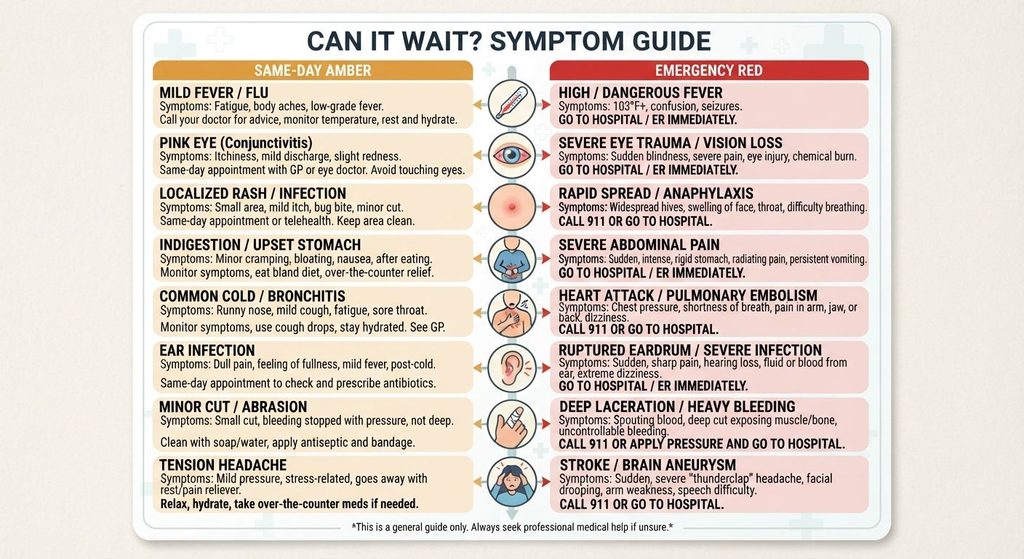
The hardest calls are the symptoms that start out mild and can turn serious. This table shows where the line usually falls.
| Symptom | Usually a Same-Day Visit If… | Go to the Emergency Hospital If… |
|---|---|---|
| Vomiting | Once or twice, pet still alert and keeping water down | Repeated, contains blood, or with a swollen belly or nonproductive retching |
| Diarrhea | Pet is bright and drinking | Large amounts of blood, severe weakness, or a young unvaccinated puppy |
| Limping | Still bearing some weight, no visible deformity | Leg hangs at an odd angle, bone visible, or after major trauma |
| Not eating | Skipped a meal or two, otherwise normal | Combined with collapse, vomiting, or pale gums |
| Lethargy | Quieter than usual but responds to you | Cannot stand, unresponsive, or breathing hard |
| Wound | Small cut, bleeding has stopped | Deep, gaping, on the chest or belly, or bleeding won’t stop |
| Ate something odd | Non-toxic item, pet acting normal | Known toxin, a sharp object, string, or a corn cob |
| Coughing | Occasional, pet eating and active | Constant, with labored breathing or blue-tinged gums |
Why Cats, Young Puppies and Senior Pets Need a Lower Threshold
Cats hide illness well, so by the time a cat looks sick it may have been unwell for days. Young puppies dehydrate quickly with vomiting or diarrhea, and an unvaccinated puppy with bloody diarrhea could have parvovirus. Senior pets have less reserve to handle illness. For any of these groups, call sooner rather than later and lean toward being seen today.
A Four-Question Check Before You Call
When something seems off, run through these questions in order. A “yes” to either of the first two points to an emergency hospital.
- Is my pet having trouble breathing, or are the gums pale, blue or gray? If yes, go to an emergency hospital now.
- Did my pet eat something toxic or suffer trauma? If yes, go now, even if your pet seems fine.
- Is it getting worse by the hour? Rapid change in energy, pain or vomiting points toward emergency care.
- Is my pet still alert, breathing normally and interested in its surroundings? If yes, a same-day vet visit is usually the right fit.
When you are unsure, call. A good front desk team can talk you through the symptoms and tell you whether to come in, wait for the next appointment or head to an emergency hospital.
Three Common Calls and Where Each One Belongs
These are typical scenarios pet owners describe on the phone, along with how they are usually routed. They are general patterns, not individual cases.
| What the Owner Describes | Key Detail | Usual Recommendation |
|---|---|---|
| “My dog threw up twice this morning but is wagging and drinking water.” | Stable, alert, no belly swelling | Same-day sick visit |
| “My large dog keeps trying to vomit, nothing comes up, and his stomach looks bigger.” | Possible bloat | Emergency hospital immediately |
| “My cat has been in and out of the litter box all afternoon.” | Depends on sex and urine output | Male cat with little urine: emergency; otherwise same-day visit |
What Happens at a Same-Day Visit at Vineland
Vineland Animal Hospital is a full-service general practice that keeps room in the schedule for sick dogs and cats. For owners searching for a same day vet near me or same day vet Orlando, here is how a visit works:
- Call (407) 233-3386 as early in the day as you can. The team asks a few questions about the symptoms and gives you a time to come in.
- Bring what helps. Photos of vomit or stool, a list of current medications, and packaging from anything your pet may have eaten.
- Exam with Dr. Melissa Millhoff. As a one-doctor practice, your pet sees the same veterinarian at every visit.
- Tests during the visit when needed. For anyone searching for vet bloodwork near me, the in-house lab and digital X-rays mean results often come back while you are still at the clinic, so treatment can start right away.
- A clear plan before treatment begins. You go home with instructions and any medications your pet needs.
New clients are welcome for same-day visits. Filling out the New Client Registration form ahead of time speeds up check-in when you arrive.
What Pet Owners Say About Same-Day Care
Reviews on Google regularly mention how quickly sick pets are seen at Vineland, with several clients noting their dog or cat was examined the same day they called. Others point to the time Dr. Millhoff spends explaining what she finds, which matters most when you are worried and need a straight answer.
Be Ready Before Anything Happens
Emergencies are easier to handle when the planning is already done:
- Save your regular vet’s number and the nearest 24-hour emergency hospital’s number in your phone
- Keep a pet carrier or a sturdy leash by the door
- Store a digital copy of vaccine records and current medications
- Put together a basic pet first aid kit; the AVMA’s pet first aid guide lists what to include and how to handle common injuries
- Know the route to the emergency hospital before you ever need it
Vineland Animal Hospital 11402 S Apopka Vineland Rd, Orlando, FL 32836 Phone: (407) 233-3386 Email: staff@vinelandanimalhospital.com
Frequently Asked Questions
-
What is the difference between an urgent care vet and an emergency vet?
An urgent care vet handles problems that need attention within a day but are not life-threatening, such as vomiting in an alert pet, limping or an ear infection. An emergency vet runs a 24-hour hospital equipped for critical cases like trauma, breathing trouble, poisoning and bloat, with oxygen, intensive monitoring and emergency surgery. Patients at an emergency hospital are seen by severity, so stable pets may wait while critical cases go first.
-
Can my regular vet see my pet the same day?
Often, yes. Many general practices, including Vineland Animal Hospital, keep space in the daily schedule for sick pets. The best approach is to call as early in the day as possible and describe the symptoms clearly. Seeing your regular vet has an added benefit: the doctor already knows your pet’s history, past test results and medications, which can lead to a faster and more accurate diagnosis.
-
Should I go to the emergency hospital if I’m not sure?
If your pet has breathing trouble, has collapsed, ate something toxic or suffered trauma, go to an emergency hospital without waiting. For anything less clear, call your vet first. The team can ask the right questions and tell you whether the problem can be seen that day or needs emergency care. Never wait overnight to see if a pet with red-flag signs improves on its own.
-
Is vomiting an emergency for dogs?
Not always. A dog that vomits once or twice but stays alert, drinks water and acts mostly normal can usually be seen at a same-day visit. Vomiting becomes an emergency when it is repeated, contains blood, or comes with a swollen belly, retching that brings nothing up, or weakness. Puppies and small dogs dehydrate faster, so they should be seen sooner.
-
What should I bring to a same-day vet visit?
Bring any medications your pet takes, previous vaccine and medical records if you are a new client, and photos of vomit or stool if relevant. If your pet ate something unusual, bring the packaging or a sample of the item. A short written timeline of when symptoms started and how they changed also helps the veterinarian narrow down the cause quickly.
Knowing the difference between a same-day problem and a true emergency is one of the most useful things a pet owner can learn, and it is far easier to learn it before the moment arrives.