Dog vaccines run on a calendar, and that calendar shifts as your dog grows. A puppy needs a tight series of shots a few weeks apart, while an adult dog settles into boosters every one to three years. This guide walks through the full schedule for the three vaccines most Orlando dogs receive (DHPP, rabies and Bordetella), what Florida law requires, and what a normal recovery looks like after the visit. If you are searching for a vet near me in southwest Orlando, Vineland Animal Hospital follows the timing described here and adjusts it to each dog’s age, health and daily routine.
Core vs Lifestyle Dog Vaccines: What Each One Covers
Veterinarians sort dog vaccinations into two groups. Core vaccines are recommended for every dog, no matter where it lives or how it spends its day. Lifestyle vaccines (also called noncore) depend on exposure: where your dog goes, which dogs it meets and whether it boards or attends daycare.
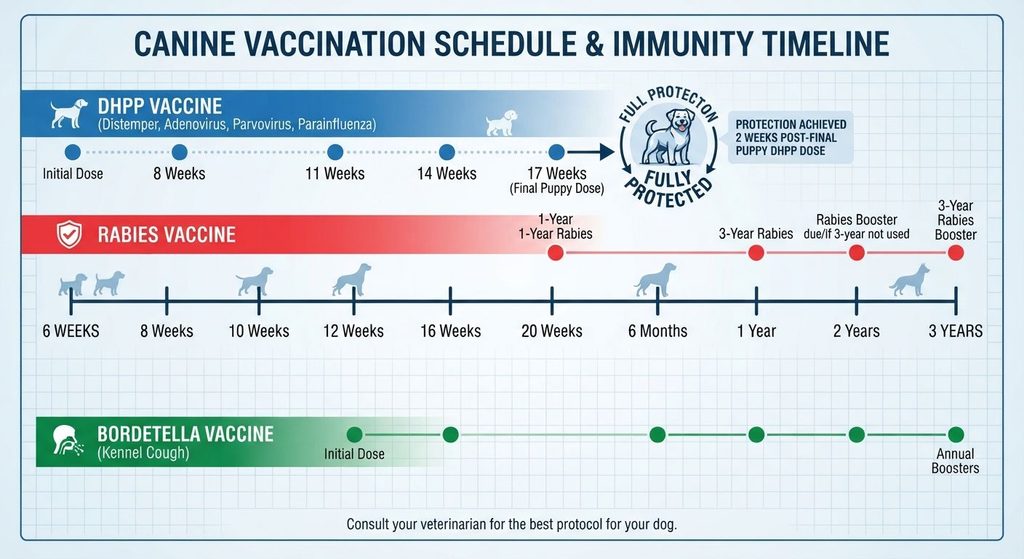
This split comes from the 2022 AAHA Canine Vaccination Guidelines, updated in 2024, the reference most US general practices use to build their protocols. DHPP and rabies are core. Bordetella is a lifestyle vaccine, but in a tourist area full of boarding kennels, groomers and busy dog parks, a large share of Orlando dogs end up needing it.
DHPP: Four Diseases in One Shot
DHPP is a combination vaccine. You may also see it written as DAPP or DA2PP on records from other clinics. The letters stand for:
- Distemper: a virus that attacks the respiratory, digestive and nervous systems. Raccoons and other wildlife can carry it.
- Hepatitis (adenovirus): an infection that damages the liver, kidneys and blood vessels.
- Parainfluenza: a respiratory virus and one of several contributors to kennel cough.
- Parvovirus: a severe intestinal virus spread through infected stool. It survives in soil and on surfaces for long periods and is especially dangerous for unvaccinated puppies.
Rabies: The Vaccine Florida Requires by Law
Rabies is almost always fatal once signs appear, and it can pass from animals to people. Florida reports rabid raccoons, bats and foxes every year, so even a dog that rarely leaves the backyard has some level of risk. That is why the state makes this vaccine mandatory rather than optional.
Bordetella: The Kennel Cough Vaccine
Bordetella bronchiseptica is one of the main bacteria behind kennel cough, which the American Veterinary Medical Association describes as a highly contagious respiratory illness known formally as canine infectious respiratory disease complex. It spreads quickly wherever dogs share air, water bowls or play space.
| Vaccine | Category | Protects Against | Who Needs It | Typical Booster After Year One |
|---|---|---|---|---|
| DHPP | Core | Distemper, adenovirus hepatitis, parainfluenza, parvovirus | Every dog | Often every 3 years |
| Rabies | Core (required in Florida) | Rabies virus | Every dog 4 months and older | 1 or 3 years, per vaccine label |
| Bordetella | Lifestyle | Bordetella bronchiseptica (kennel cough) | Dogs that board, groom, train or socialize | Usually yearly |
Puppy Vaccine Schedule by Age
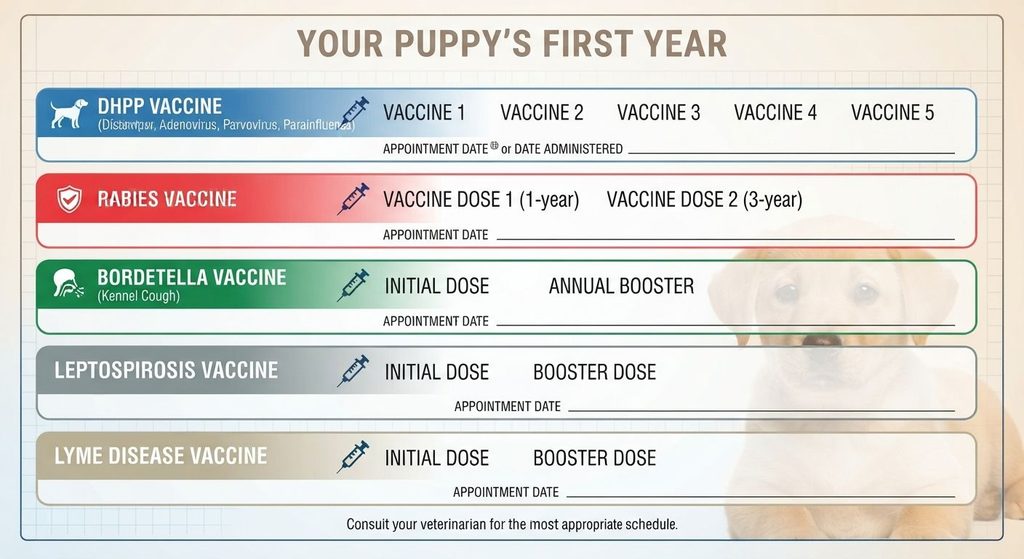
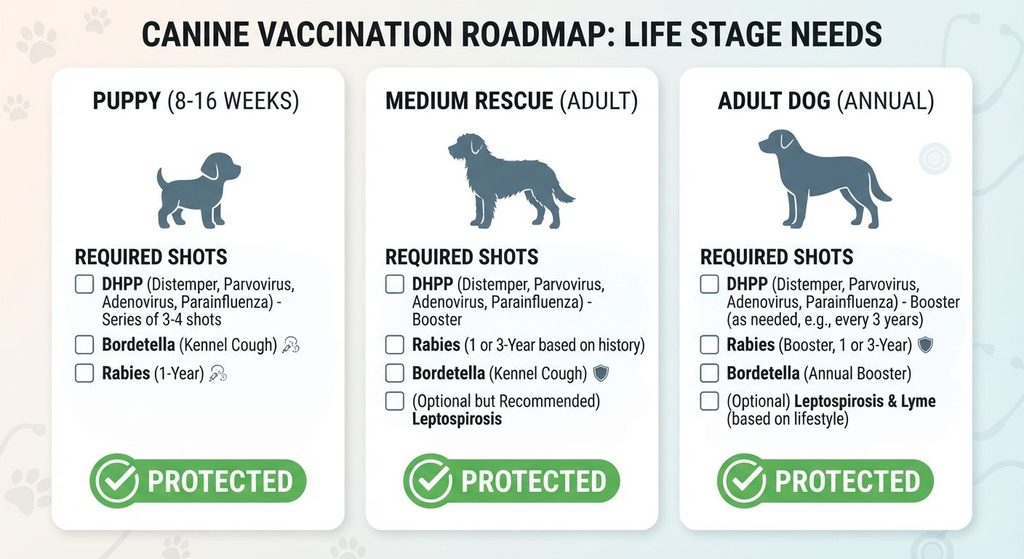
The puppy series is where most of the scheduling happens. Doses are spaced two to four weeks apart, and the exact start date depends on when your puppy came home and what the breeder or shelter already gave. Bring any paperwork you received so nothing is repeated or skipped. Our page on puppy shots in Orlando covers the rest of the first-year visit, including deworming, nutrition and behavior questions.
| Age | DHPP | Rabies | Bordetella | Also Covered at the Visit |
|---|---|---|---|---|
| 6 to 8 weeks | Dose 1 | Not yet | Optional for early group exposure | Exam, deworming, start parasite prevention |
| 10 to 12 weeks | Dose 2 | Not yet | First dose if needed | Growth check, socialization advice |
| 14 to 16 weeks | Dose 3 | One dose between 12 and 16 weeks | Second dose if injectable form was used | Rabies certificate issued |
| 16 weeks or older | Final dose if the last one fell before 16 weeks | Done | As needed | Confirm protection date |
| 12 to 16 months | Booster | Booster (12 months after first dose) | Renew | First adult wellness exam |
Why the Final DHPP Dose Lands at 16 Weeks or Later
Puppies are born with antibodies from their mother’s milk. Those antibodies protect them early on, but they also block a vaccine from working. They fade at a different pace in every puppy, and no routine test pinpoints the exact week. Giving doses every few weeks until at least 16 weeks of age makes sure one of them lands after the maternal antibodies are gone.
The number of shots is not the goal. A puppy that starts at 6 weeks may need four DHPP doses, while one that starts at 9 weeks may finish in three. What matters is that the last dose is given at or after 16 weeks.
When Is a Puppy Protected Enough for Dog Parks?
Plan on one to two weeks after the final DHPP dose. Until then, skip dog parks, pet store floors, highway rest stops and any patch of grass where unknown dogs relieve themselves, since parvo can linger there. Socialization still matters during this window. Puppy classes that require proof of vaccination and clean their floors, and playdates with healthy, vaccinated adult dogs at home, are reasonable ways to build confidence without unnecessary risk.
Adult Dog Vaccination Schedule
Once the puppy series is done, the schedule slows down considerably. Adult dogs still need a yearly visit, but not every vaccine is due every year.
The One-Year Booster Visit
Between 12 and 16 months of age, your dog gets its first round of adult boosters: DHPP and rabies, plus Bordetella if your dog’s routine calls for it. Florida law sets the rabies booster at 12 months after the first dose, so this visit is not one to push back.
Every One to Three Years After That
After the one-year booster, DHPP is commonly given every three years. Rabies follows the label of the vaccine used, which is either a one-year or three-year product. Bordetella is usually renewed yearly, and some boarding facilities ask for it more often.
Even in a year when no core vaccine is due, the annual exam still matters. It is when your dog’s weight, teeth, heart and skin are checked, and in Central Florida it is also when the yearly heartworm test happens. Mosquitoes here stay active for most of the year, which is why heartworm prevention for dogs should run year-round alongside the vaccine plan.
Adult Dogs With an Unknown or Lapsed History
Adopted an adult dog with no records? Dogs older than 16 weeks with an unknown history usually receive DHPP (one or two doses, two to four weeks apart, depending on the vaccine and the doctor’s assessment) and a rabies vaccine at the first visit, followed by boosters one year later.
If your dog’s records are simply overdue by a few months, a full restart is rarely needed. In most cases a single booster brings protection back up to date. Send previous records ahead of time through our New Patient Center so the plan can be set before you arrive.
Florida Rabies Law: What Dog Owners Need to Know
Florida’s rules are set out in Section 828.30 of the Florida Statutes. The key points for dog owners:
- Age: Every dog, cat and ferret 4 months of age or older must be vaccinated against rabies by a licensed veterinarian using a USDA-licensed vaccine.
- First booster: The animal must be revaccinated 12 months after the initial vaccine. After that, the interval follows the vaccine manufacturer’s directions.
- Certificate: The veterinarian provides a rabies vaccination certificate to the owner and the local animal control authority. Keep yours handy, since groomers, boarding facilities and daycare centers often ask for it.
- Medical exemption: A dog can be exempted only if a licensed veterinarian examines it and certifies in writing that vaccinating would endanger its health. The dog must be vaccinated as soon as its health allows.
- Titers: Antibody test results cannot be used in place of a current rabies vaccine under the statute.
- Penalty: Failing to vaccinate is a civil infraction.
For owners searching for a rabies vaccine in Orlando, the vaccine and certificate are handled during a regular wellness or puppy visit, so there is no need for a separate trip.
Bordetella: Who Needs It and How Often
Bordetella is recommended for dogs that spend time around other dogs in shared spaces:
- Boarding and doggy daycare
- Grooming salons
- Training and puppy classes
- Dog parks and dog-friendly events
- Shows, sports and travel
Vineland requires a current Bordetella vaccine for dog boarding, as do most kennels and daycare facilities in the area.
| Form | How It Is Given | Initial Doses | Good to Know |
|---|---|---|---|
| Intranasal | Drops in the nose | 1 | Builds protection in the airway itself; mild sneezing for a few days is common |
| Oral | Liquid placed inside the cheek | 1 | Easier for dogs that resist nose drops |
| Injectable | Shot under the skin | 2, given 2 to 4 weeks apart | Useful for dogs that cannot tolerate the other forms |
Timing matters. If your dog is due before a trip or a boarding stay, schedule the vaccine at least a week ahead so it has time to work and so the record is on file before drop-off.
One honest caveat: kennel cough has several causes, so Bordetella lowers the risk and severity rather than ruling out every cough. Some dogs with heavy social schedules may also benefit from other lifestyle vaccines, such as the one for canine influenza or leptospirosis. Dr. Melissa Millhoff will tell you whether your dog’s routine actually calls for them.
What to Expect After Dog Vaccinations
Most dogs go home and carry on with their day. Some show mild, short-lived signs that mean the immune system is responding:
- Soreness or mild swelling where the shot was given
- Sleepiness or lower energy for a day or two
- A slightly reduced appetite
- A mild fever
- Sneezing or a runny nose for a few days after an intranasal Bordetella dose
- A small, firm bump at the injection site that fades over a few weeks
Call the clinic if a bump lasts more than a few weeks or keeps getting bigger.
Signs That Need Immediate Attention
Serious vaccine reactions are rare, but they usually appear within minutes to a few hours. Watch for:
- Swelling of the face, muzzle or around the eyes
- Hives or sudden, intense itching
- Repeated vomiting or diarrhea
- Trouble breathing
- Weakness or collapse
Call right away if you see any of these. Vineland Animal Hospital is not an emergency hospital, so if a reaction happens after the clinic has closed, go straight to the nearest 24-hour emergency hospital. For milder concerns the next day, such as a dog that still is not eating, a same day vet near me visit can usually sort it out quickly.
If your dog has reacted to a vaccine before, say so before any shots are given. The plan can be adjusted by spreading vaccines across separate visits, using a different form, or keeping your dog for observation afterward.
Three Common Vaccine Scenarios and How the Plan Changes
Every dog arrives with a different starting point. These are the three patterns seen most often and how each plan typically shapes up.
| Scenario | Starting Point | Typical Plan | Fully Up to Date |
|---|---|---|---|
| New puppy from a breeder | 8 weeks old, one DHPP dose on record | DHPP every 3 to 4 weeks until 16 weeks or older, rabies between 12 and 16 weeks, Bordetella before classes | About 2 weeks after the final DHPP |
| Rescue with no records | 6 months old, history unknown | DHPP series for dogs over 16 weeks, rabies at the first visit, Bordetella if boarding is planned | After the DHPP series is complete |
| Adult with lapsed boosters | 5 years old, rabies and DHPP several months overdue | Wellness exam, catch-up boosters, new rabies certificate, heartworm test | Same day for most dogs |
Dog Vaccines Near Me: Planning a Visit in Southwest Orlando
If you have been searching for dog vaccines near me or pet vaccines near me, a little preparation makes the appointment faster and more useful.
Bring these to the visit:
- All previous vaccine records, including rabies certificates from other states or clinics
- A list of current medications, supplements and preventives
- Notes on any past vaccine reactions
- A fresh stool sample if the clinic asks for one
- Questions about diet, behavior, or travel and boarding plans
Every wellness exam at Vineland Animal Hospital is done by Dr. Melissa Millhoff, so the same doctor tracks your dog’s history from one year to the next. Families from Dr. Phillips, Bay Hill, Windermere, Winter Garden, Ocoee and Kissimmee use the clinic for dog vaccinations in Orlando, FL. You can see the full list of vaccines and what each exam includes on our page for dog vaccines near me, or call (407) 233-3386 to plan your dog’s schedule.
Vineland Animal Hospital 11402 S Apopka Vineland Rd, Orlando, FL 32836 Phone: (407) 233-3386 Email: staff@vinelandanimalhospital.com
Frequently Asked Questions About Dog Vaccines
-
How many shots does a puppy need to be fully vaccinated?
Most puppies receive three or four DHPP doses between 6 and 16 weeks of age, plus one rabies vaccine between 12 and 16 weeks. The exact count depends on when the series started, because the last DHPP dose must be given at or after 16 weeks. A puppy is considered protected against the core diseases about one to two weeks after that final dose, with boosters due one year later.
-
Can my dog get DHPP and rabies on the same day?
Yes. Giving DHPP and rabies at the same appointment is routine and safe for most healthy dogs, and it reduces the number of trips. Small breeds or dogs with a history of vaccine reactions are sometimes an exception. In those cases the veterinarian may split the vaccines across two visits a few weeks apart to lower the chance of a reaction and make it easier to tell which vaccine caused any side effects.
-
Does every dog need the Bordetella vaccine?
No. Bordetella is a lifestyle vaccine, so it is recommended based on exposure rather than given to every dog automatically. Dogs that board, attend daycare, visit groomers, take training classes or play at dog parks benefit most. A dog that stays home and rarely meets other dogs may not need it. Most boarding facilities and many groomers require proof of a current Bordetella vaccine before accepting a dog.
-
What happens if my dog misses a booster?
A missed booster leaves a gap in protection, but most dogs do not need to restart the entire series. If the delay is a few months, a single booster usually brings an adult dog back up to date. Puppies who fall behind during their initial series may need an extra dose. Rabies is the exception to watch closely, since Florida law requires a current vaccine and the timing affects your certificate.
-
Do senior dogs still need vaccines?
Yes. Florida’s rabies law has no upper age limit, and older dogs can still catch distemper, parvovirus and kennel cough. That said, a senior dog’s vaccine plan often looks different. The veterinarian weighs age, health conditions and lifestyle, and may adjust which lifestyle vaccines are given. A written medical exemption from rabies is possible only when a licensed veterinarian determines that vaccinating would endanger the dog’s health.
-
Is a rabies vaccine from another state valid in Florida?
Generally, yes. A rabies vaccine given by a licensed veterinarian in another state remains valid until its expiration date, and Florida’s statute prevents local governments from requiring revaccination of currently vaccinated animals except after a rabies exposure. Bring the original certificate to your first visit. The veterinarian will confirm the vaccine type and due date and set your dog’s next rabies booster.
A clear vaccine schedule is one of the simplest ways to keep your dog healthy for years, so keep those records close and those boosters on time.